New!
Sale!
The Destinies of Individuals and Nations (CW 157)
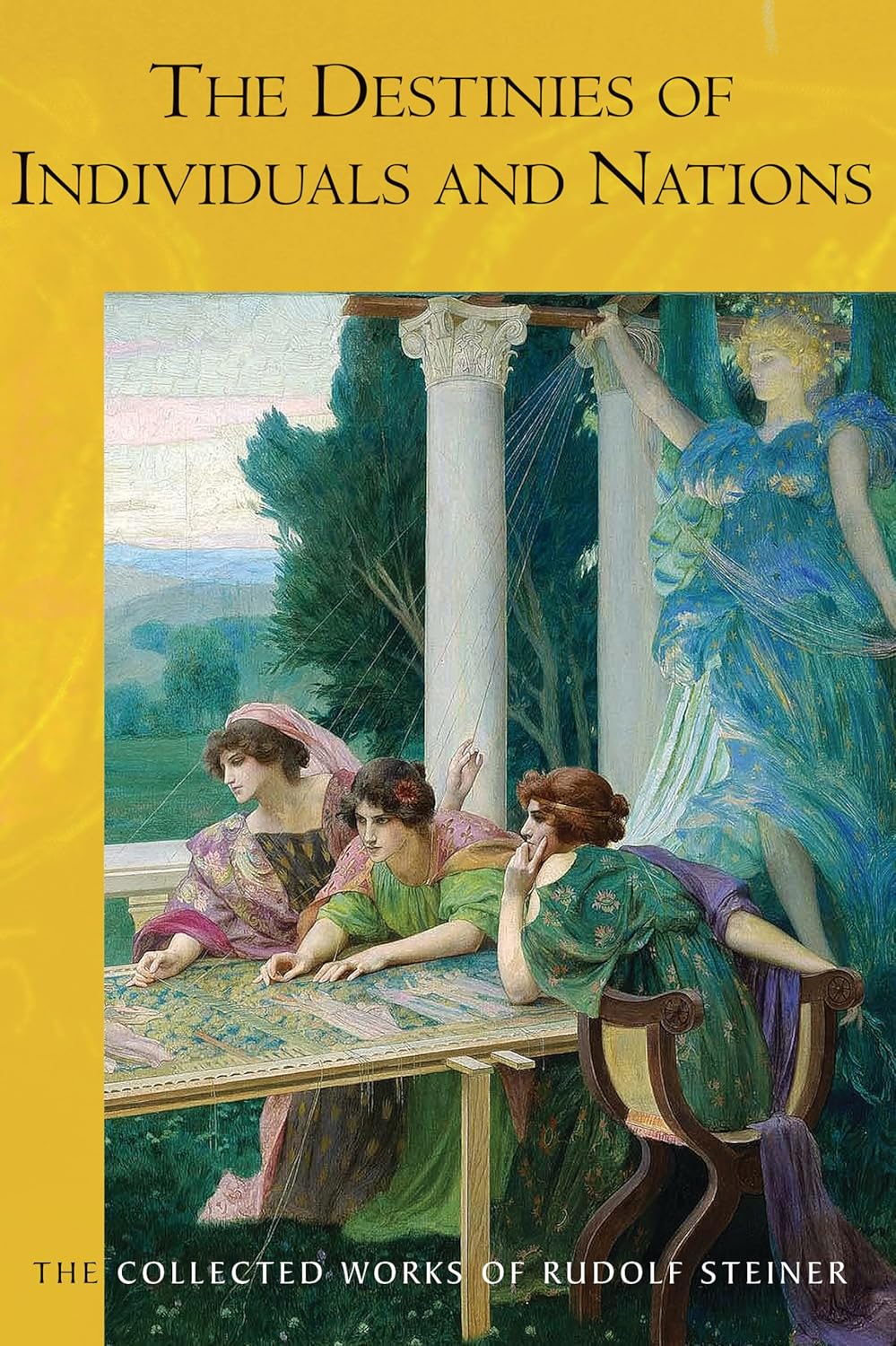
-5%The Destinies of Individuals and Nations Fourteen lectures September 1914–July 1915, Berlin (CW 157) Amid the darkness of World War I, Rudolf Steiner offered a profoundly spiritual response to the tragedy of global conflict. With compassion and clarity, each of these lectures begins with a reverent verse honouring the fallen, before unfolding a deeper perspective on the unseen forces shaping human destiny. Steiner reveals the workings of spiritual beings, karmic patterns and the guiding influence of the Christ Impulse and Michaelic Spirits – forces he saw as central to both individual lives and the destiny of nations. From the prophetic nature of dreams to the cosmic significance of our thinking, feeling and willing, these lectures illuminate how the spiritual and material realms intertwine. Steiner explores the stages of spiritual perception – imagination, inspiration and intuition – and their role in awakening human consciousness. Topics such as the rhythm of sleep and waking, the etheric body, and the clash between the cultures of materialism and spiritual insight are directly relevant to our modern condition. Far more than a historical reflection, this volume is a profound meditation on the spiritual evolution of humanity, and a timeless guide for those seeking meaning amid external upheaval. It speaks to the soul’s journey through suffering, and the redemptive power of spiritual consciousness. The revised edition of these lectures features an introduction by translator Anna Meuss, extensive editorial notes and an index. C O N T E N T S Publisher’s Note Introduction, by Anna Meuss Lecture 1 Berlin, 1 September 1914 The Destinies of Individuals and of Nations Lecture 2 Berlin, 31 October 1914 Nationalities and Nationalism in the Light of Spiritual Science Lecture 3 Berlin, 28 November 1914 The Nature of European Folk Souls Lecture 4 Berlin, 17 January 1915 The Nature of the Christ Impulse and the Michaelic Spirit Serving It — I Lecture 5 Berlin, 19 January 1915 The Nature of the Christ Impulse and the Michaelic Spirit Serving It — II Lecture 6 Berlin, 26 January 1915 Spiritual Perception Essential at the Present Time Lecture 7 Berlin, 22 February 1915 Personal and Supersensible Aspects (Relating to Certain Individuals) Lecture 8 Berlin, 2 March 1915 Three Decisions on the Path to Imaginative Perception Lecture 9 Berlin, 9 March 1915 The Sleeping-and-Waking Rhythm in the Context of Cosmic Evolution Lecture 10 Berlin, 16 March 1915 Problems on the Spiritual Path — National Characteristics in Europe Moulded by Folk Spirits Lecture 11 Berlin, 20 April 1915 Etheric Man within Physical Man Lecture 12 Berlin, 10 June 1915 The Group Sculpted for the Building in Dornach Lecture 13 Berlin, 22 June 1915 The Prophetic Nature of Dreams: Moon, Sun and Saturn Man Lecture 14 Berlin, 6 July 1915 The Cosmic Significance of Our Sensory Perceptions — Our Thinking, Feeling and Will Activity Original German Mantras Notes Rudolf Steiner’s Collected Works Significant Events in the Life of Rudolf Steiner Index About the Author Rudolf Steiner (b. Rudolf Joseph Lorenz Steiner, 1861–1925) was born in the small village of Kraljevec, Austro-Hungarian Empire (now in Croatia), where he grew up. As a young man, he lived in Weimar and Berlin, where he became a well-published scientific, literary, and philosophical scholar, known especially for his work with Goethe’s scientific writings. At the beginning of the twentieth century, he began to develop his early philosophical principles into an approach to systematic research into psychological and spiritual phenomena. Formally beginning his spiritual teaching career under the auspices of the Theosophical Society, Steiner came to use the term Anthroposophy (and spiritual science) for his philosophy, spiritual research, and findings. The influence of Steiner’s multifaceted genius has led to innovative and holistic approaches in medicine, various therapies, philosophy, religious renewal, Waldorf education, education for special needs, threefold economics, biodynamic agriculture, Goethean science, architecture, and the arts of drama, speech, and eurythmy. In 1924, Rudolf Steiner founded the General Anthroposophical Society, which today has branches throughout the world. He died in Dornach, Switzerland.